Wildfires have become an increasingly important consideration for homeowners across California, changing the way people buy, sell, and maintain their properties. While location, price, and amenities remain key factors, today’s buyers are also evaluating how well a home can withstand wildfire risks and whether it will remain affordable to insure over the long term.
This shift has led to growing demand for fire-resistant homes, particularly in communities throughout the Sacramento region and other parts of Northern California. For buyers and homeowners alike, investing in resilient construction and wildfire preparedness is becoming an important part of protecting both their families and one of their largest financial investments.
California’s longer wildfire seasons and changing insurance landscape have made home resilience a significant factor in purchasing decisions. Buyers are no longer asking only about the age of the roof or the size of the backyard. They’re also interested in whether a home has been built or upgraded to better withstand wildfire threats.
Questions about roofing materials, exterior construction, defensible space, and homeowners insurance have become common during the buying process. Many prospective homeowners also want to understand whether a property’s location could affect future insurance costs or coverage availability.
As a result, homes that include wildfire-resistant features often stand out in today’s competitive market.
One of the biggest concerns facing California homeowners is the rising cost and limited availability of homeowners insurance. In many higher-risk areas, insurance providers have tightened underwriting requirements or increased premiums in response to growing wildfire exposure.
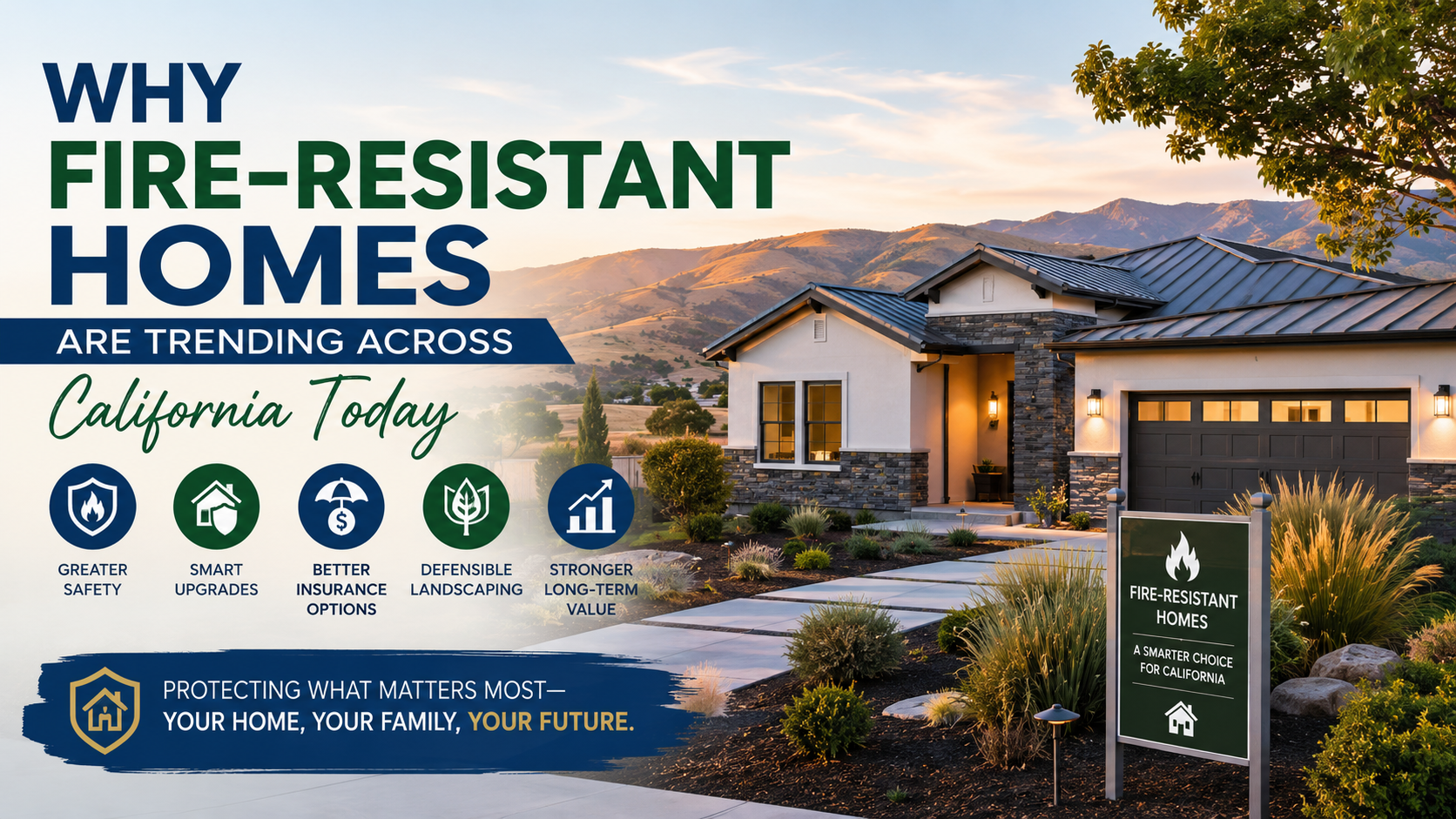
Because of these changes, buyers are paying closer attention to properties that have been updated with fire-resistant materials and maintained to reduce wildfire risk. Homes with durable roofing, non-combustible siding, ember-resistant vents, and properly maintained landscaping may offer greater peace of mind and could improve insurability compared to properties that lack these improvements.
Although every insurance company evaluates risk differently, wildfire mitigation has become an increasingly important factor in the overall cost of homeownership.
Modern building practices have introduced a variety of features designed to improve a home’s ability to withstand wildfire conditions. Class A fire-rated roofing materials such as metal, concrete tile, and composition shingles provide significantly greater protection than traditional wood shake roofs. Exterior finishes like stucco, fiber cement, brick, and stone also reduce the chance of ignition from flying embers.
Windows have become another important consideration. Dual-pane tempered glass offers greater resistance to intense heat while improving energy efficiency throughout the year. Likewise, ember-resistant vents help prevent wind-driven embers from entering attics and crawl spaces, which are common points of ignition during wildfires.
Even the landscaping surrounding a home plays a critical role. Maintaining defensible space by trimming vegetation, removing debris, and creating appropriate buffer zones can significantly reduce wildfire risk while enhancing the property’s appearance.
Not every home was originally built with fire-resistant materials, but homeowners can still make meaningful improvements. Replacing vinyl gutters with metal systems, upgrading to fire-rated decking materials, installing automated irrigation systems, and replacing wood fencing near the home with non-combustible alternatives are practical upgrades that improve both safety and long-term property value.
Routine maintenance also remains one of the most effective forms of wildfire protection. Keeping roofs and gutters free of leaves, removing dead vegetation, and maintaining healthy landscaping are relatively simple tasks that can reduce potential fire hazards while preserving curb appeal.
These improvements not only help protect the property but also make a home more attractive to future buyers who are increasingly focused on resilience.
If you’re planning to purchase a home in California, it’s important to evaluate more than the home’s appearance and asking price. Understanding the property’s insurance options, roofing materials, recent renovations, wildfire mitigation efforts, and local fire hazard designation can help you make a more informed investment.
Working with a knowledgeable real estate professional can also help you identify features that may affect future ownership costs and ensure there are no unexpected surprises after closing.
As climate conditions continue to evolve, resilience is becoming an essential part of California real estate. Fire-resistant homes are no longer viewed as specialty properties or luxury upgrades—they are quickly becoming the new standard for buyers seeking long-term security and affordability.
Homeowners who invest in wildfire preparedness today may benefit from stronger buyer interest, improved marketability, and greater confidence that their property is better equipped for the future.
California’s housing market continues to evolve, and wildfire preparedness is now an important part of homeownership. Whether you’re buying your first home, preparing to sell, or planning renovations, understanding how fire-resistant features affect safety, insurance, and property value can help you make smarter decisions.
If you’re considering buying or selling a home in Sacramento, Elk Grove, or the surrounding communities, Heather Land is here to help. With more than 20 years of real estate experience, she provides trusted guidance to help clients navigate today’s changing market with confidence.
Ready to make your next move? Contact Heather Land today to learn more about buying or selling a home in the Sacramento region.
Do fire-resistant homes reduce insurance costs?
While savings vary by insurer and location, homes with wildfire-resistant features may qualify for more insurance options and can sometimes receive more favorable underwriting consideration.
What are the most important fire-resistant upgrades?
Class A roofing, non-combustible siding, tempered glass windows, ember-resistant vents, and defensible space are among the most valuable improvements homeowners can make.
Is defensible space required in California?
Many California communities have defensible space requirements, particularly in wildfire-prone areas. Maintaining your property also helps improve safety and supports wildfire prevention efforts.
My Journey as Realtor
Services
Client Testimonials
Neighborhood
Feature Listings
Seller Guide
Buyer Guide
Probate Guide
Monthly Newsletters
© 2025 Created with Skyline Webcraft
My Journey as Realtor
Services
Client Testimonials
Neighborhood
Feature Listings
Seller Guide
Buyer Guide
Probate Guide
Monthly Newsletters
© 2025 Created with Skyline Webcraft